The Growth Is Real. So Is the Strain.
Aesthetic medicine is growing. But growth without structure compounds stress faster than it compounds revenue. This report reveals what 628 practice owners are actually experiencing — and what the data says about the path forward.
70%
Say running their practice is more stressful than expected
73%
Say day-to-day complexity has increased in the past two years
82%
Say operational inconsistency can put patient outcomes at risk
7 in 10
Made a major investment without confidence it was the right call
2x
Stronger growth when the practice is operationally disciplined
2.5x
More likely to be high-growth when the practice feels sustainable
The practices that win long-term aren't the ones that grew fastest. They're the ones that built the infrastructure to grow sustainably.
The Growth Paradox
Let's start with the good news: aesthetic medicine is growing. By almost every external measure, 2026 looks like a boom moment — full schedules, rising revenue, a patient population that keeps showing up. So why do 7 in 10 owners say it's more stressful than they expected?
70%
Say running their business is more stressful than expected
73%
Say day-to-day complexity has increased in the past two years
Growth without structure compounds stress faster than it compounds revenue. Every new patient, provider, room, device, or location adds a layer of operational demand. For practices running on informal systems, that demand accumulates.
Meanwhile, the definition of success is quietly shifting. When asked what success looks like in 2026, the answers weren't what you'd expect from a growth story.
#1 Definition of Success: Creating outcomes that patients rave about.
32%
Say success means reducing day-to-day chaos
30%
Say it means being able to step away
32%
Say it means confidence in meeting clinical & compliance expectations
Moxie’s Take
Busy is not the goal. Profitable, sustainable, and clinically excellent is the goal. Growth that outpaces your systems isn't an asset — it's a liability you're paying for in stress, near-misses, and owner burnout.
Flying Blind: The Metrics Gap
Aesthetic practice owners make high-stakes decisions constantly. But many are making those decisions without a clear view of what the business is actually doing.
63%
Worry their practice looks healthier than it actually is
68%
Experienced tighter cash flow than expected despite a full schedule
Of those 68% who hit unexpected cash flow pressure, only 32% were confident they knew what was causing it. The schedule said yes. The bank account said something else. And most couldn't tell you exactly why.
7 in 10
Made a major investment without being confident it was the right call
The financial literacy gap runs deep. Many owners didn't start their practices as business operators — and most EMR platforms don't fill that gap.
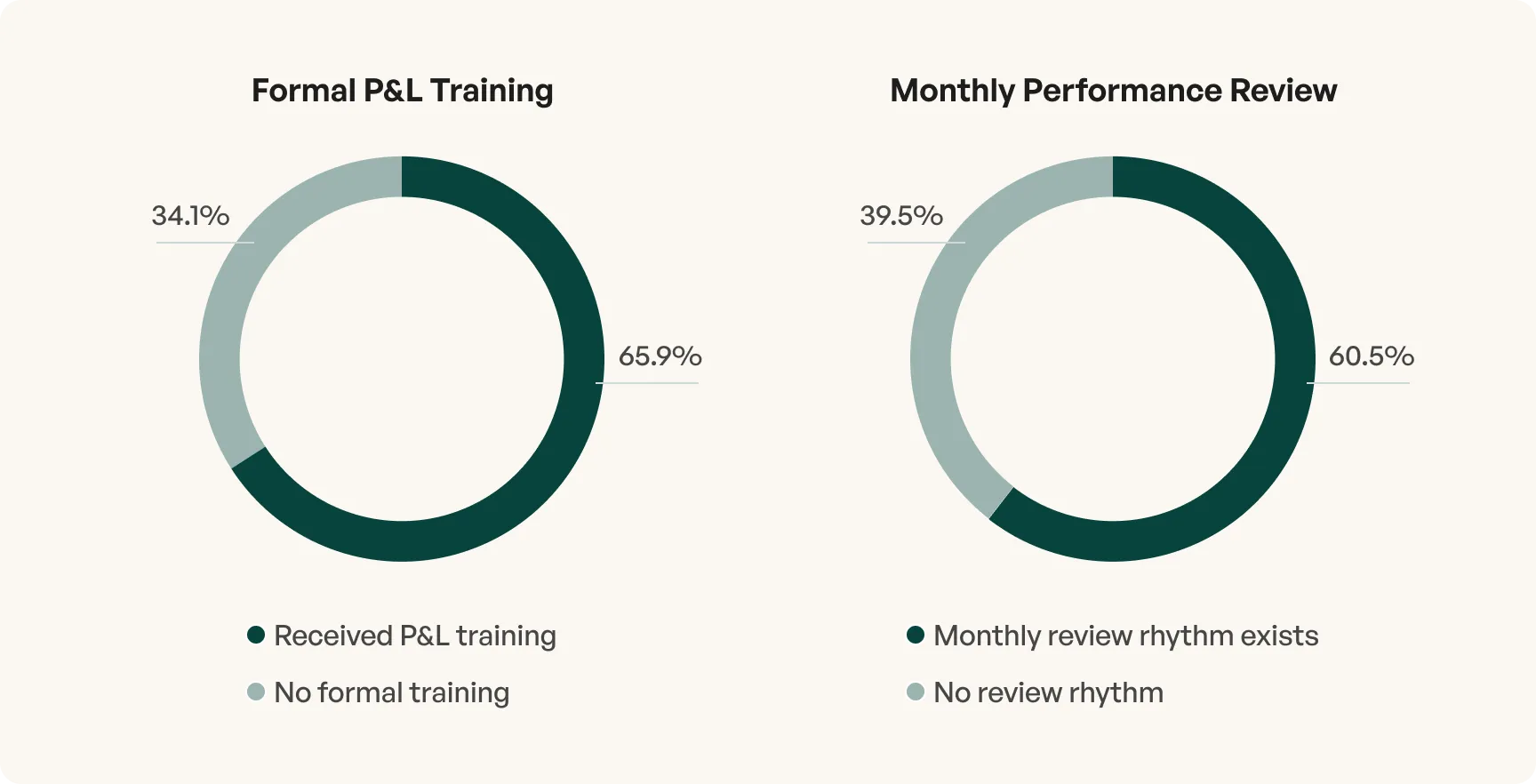
34%
Have not received P&L training
29%
Have not received budgeting training
39%
Have no repeatable monthly performance review rhythm
Moxie-Supported Practices
Were 37% less likely to worry their practice looks healthier than it is, and 42% less likely to report making a major investment without confidence. Margin intelligence and real-time financial reporting change what's visible — and what's possible.
Moxie’s Take
The most dangerous number in your business isn't a bad one. It's the one you don't know. Financial clarity isn't a finance thing — it's a peace of mind thing.
The Owner Dependency Trap
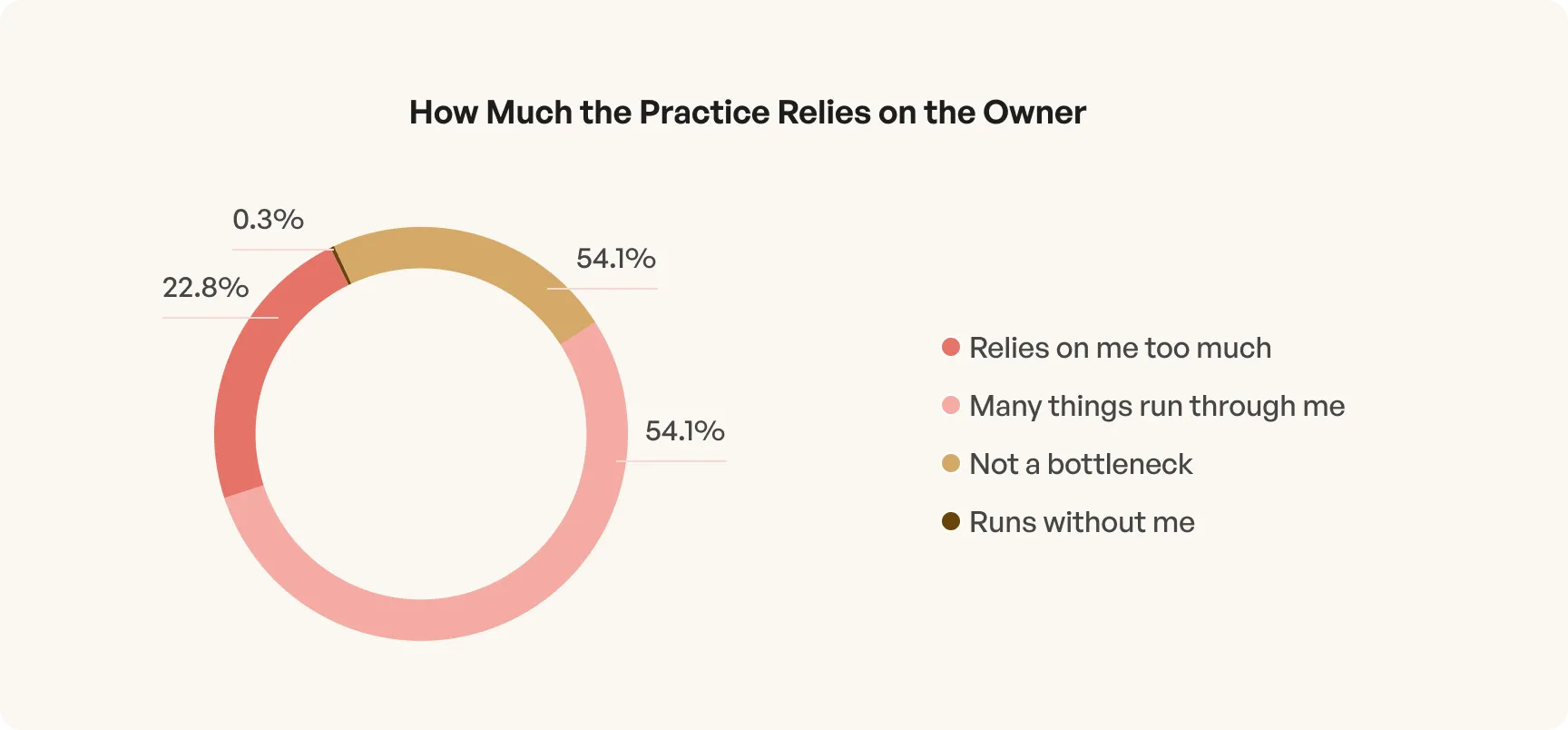
One thing was very clear in the data: most aesthetic practices are highly dependent upon the owner themselves.
When the business lives in the owner's head, every absence creates risk and every vacation comes with an asterisk.
23%
Say their practice relies on them too much — practices with 10+ providers are 57% more likely to feel this way
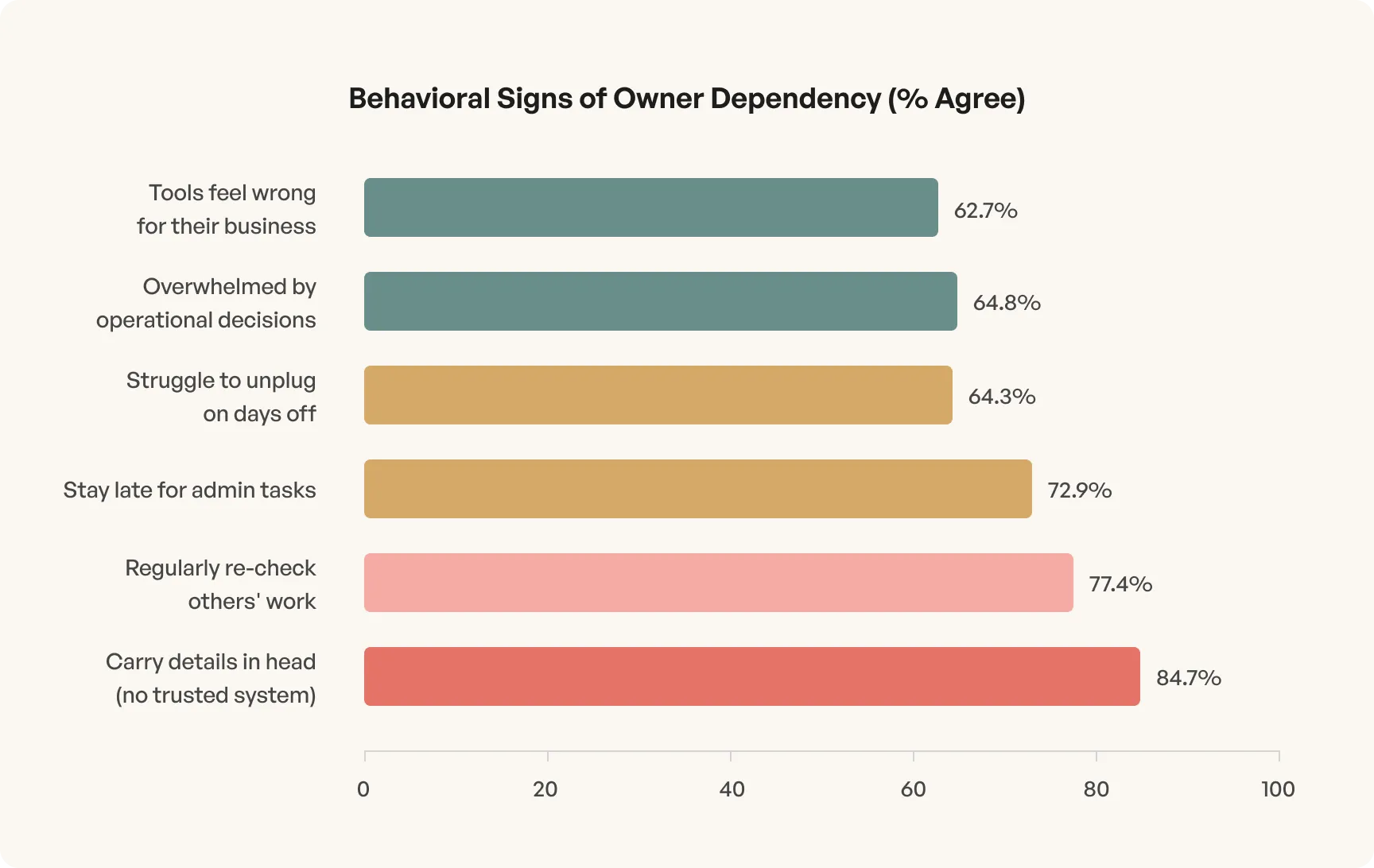
85%
Carry key business details mentally because there's no system they fully trust
77%
Regularly recheck or redo work that should be handled by someone else
Moxie-Supported Practices
Were 35% less likely to say they carry key details mentally because there isn't a system they trust. Systems create delegation. Delegation creates freedom. That's Peace — the first pillar of the Triple Bottom Line.
Moxie’s Take
Structure creates freedom. SOPs, clear accountability, and documented workflows aren't bureaucracy. They're how you buy your life back.
5
Process & Accountability
Operational Turbulence
Operational chaos in an aesthetic practice rarely announces itself with a dramatic incident. It doesn't feel like chaos at first. It feels like Tuesday.
It's the handoff that happened over text and got lost. The chart that didn't get closed. The consent that got skipped on a hectic afternoon. The follow-up that fell through because everyone assumed someone else had it. Individually, each one feels minor. Collectively, they're a pattern.
75%
Report handoffs regularly happen verbally or over text, causing details to get lost
77%
Say unclear ownership creates tension between staff
73%
Of owners stay late or work off-clock for admin — 97% say this happens at least weekly
78%
Say their staff does the same
Those small breaks have real consequences in the reviews and the refund ledger:
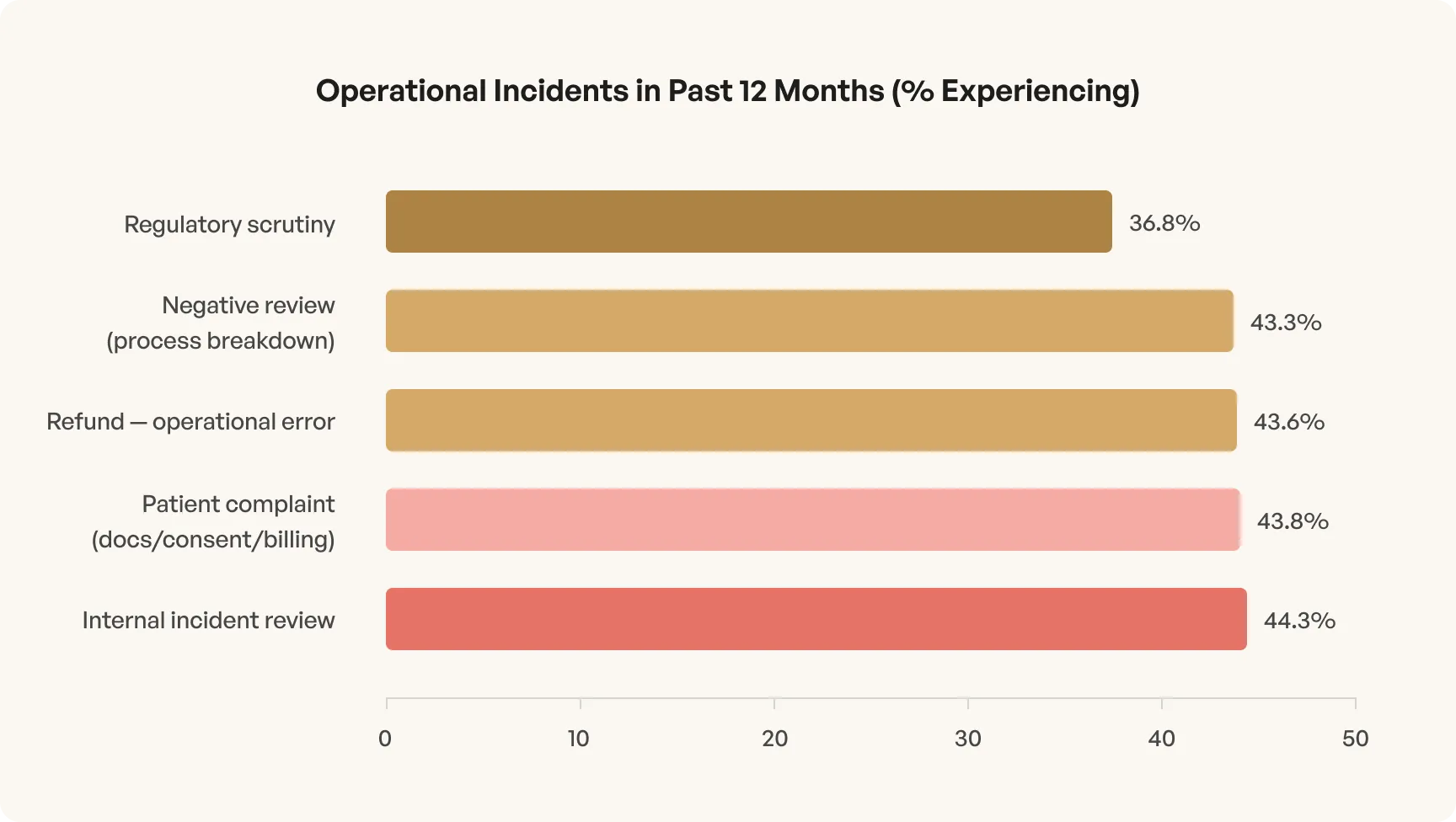
44%
Issued a refund or credit due to an operational error in the past year
43%
Received a negative review tied to a process breakdown
7 in 10
Say something important almost slipped through the cracks in the past year
Moxie’s Take
Every verbal handoff is a process failure waiting to happen. Every task that lives in someone's head is a single point of failure. The fix isn't more effort — it's better infrastructure.
Talk to a Practice Success Manager about where your practice stands and what a clinically-led growth plan could look like for yours.
Book a Call
6
Patient Safety & Standards
Risk Creep: Compliance & Clinical Quality
In aesthetic medicine, risk doesn't arrive all at once. A missing signature here. A chart not fully closed there. Each feels minor in the moment. Collectively, they create real exposure.
63%
Say their practice feels "one missed step away" from a bigger problem
73%
Say compliance-related tasks are hard to stay on top of as their practice grows
82%
Say operational inconsistency can put clinical quality or patient outcomes at risk
Only 14%
Say both patient charts and consents are always completed thoroughly and correctly
The specific risk categories practice owners are most concerned about:
Clinical consistency across providers
Consent capture (10+ non-clinical staff: 300% more likely to call this a major risk)
Privacy & patient communication
Patient documentation / charting
Licensing & credentialing tasks
Moxie-Supported Practices
Were 15% less likely to say compliance tasks feel hard to stay on top of as their practice grows. Compliance Safeguards built into the platform turn compliance from a worry into a workflow.
Moxie’s Take
Clinical excellence and operational rigor are the same track. A missed consent and a missed contraindication are both failures of system design. Practices that treat compliance as infrastructure — not afterthought — grow without fear.
The Patient Experience Squeeze
The aesthetic patient of 2026 is informed, opinionated, and increasingly specific. They've done the TikTok research. They arrive with treatment names, unit counts, and screenshots.
78%
Say patients increasingly arrive requesting specific treatments rather than seeking clinical guidance
This creates real tension for clinicians trained to lead with clinical judgment. You know when a patient is asking for something contraindicated, premature, or simply wrong for them. But the pressure to accommodate is real.
70%
Say saying "no" to a requested treatment feels riskier than it used to, due to fear of negative reviews
Despite this pressure, providers are unambiguous about what success looks like. The #1 answer — ahead of revenue, ahead of locations — was creating outcomes that patients rave about. The clinical identity is intact. The operational infrastructure to protect it is what's often missing.
Moxie’s Take
The TikTok-informed patient isn't the problem. The problem is a practice that has to choose between a negative review and a clinical boundary. Practices with strong clinical frameworks don't face that choice — they lead the conversation.
What Thriving Practices Do Differently
Clear skies aren't luck. They're infrastructure. The practices that feel stable, sustainable, and in control aren't just lucky — they've built something specific.
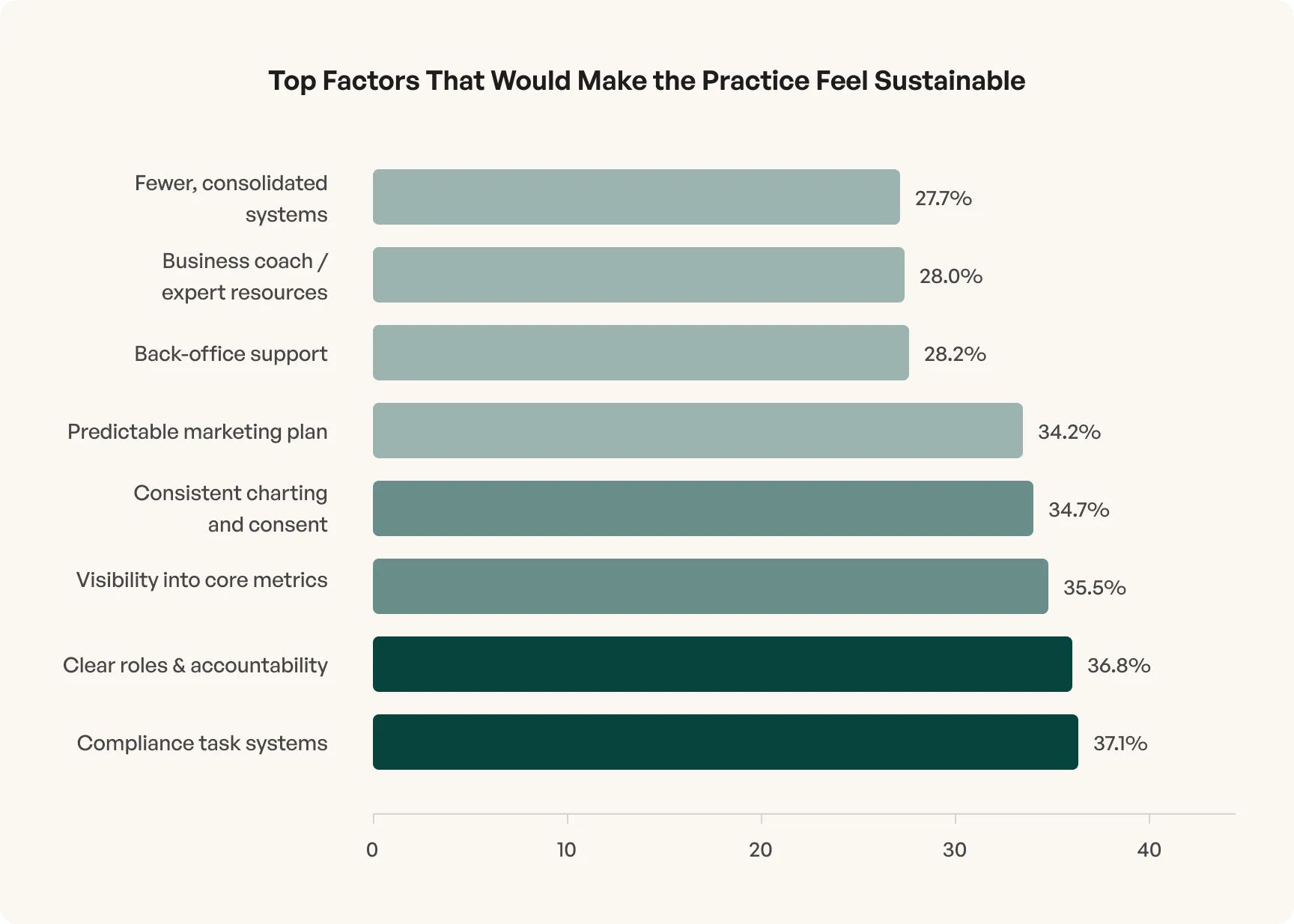
When asked what most contributes to sustainability, the top three answers were:
Systems that ensure compliance-critical tasks are always completed on time
Clear roles and accountability across the team
Reliable visibility into core performance metrics — profitability, retention, average ticket, service mix
The data also reveals a powerful compounding effect when practices build operational discipline:
2.5x
Practices that feel "very sustainable" are 2.5x more likely to be high-growth.
2x
Practices with operational discipline achieve strong growth at 2x the rate of undisciplined practices.
Structure doesn't slow growth. It accelerates it. Practices that invest in operational discipline aren't sacrificing velocity for safety — they're building the kind of foundation that makes high growth sustainable rather than terrifying.
Moxie-supported practices appeared consistently throughout the survey as an outlier group — in the right direction:
Worry their practice looks healthier than it is
Made a major investment without confidence it was right
Carry key details mentally — no trustworthy system
Say compliance tasks are hard to stay on top of
Feel their tools were designed for a different kind of business
Moxie’s Take
Sustainability isn't a personality trait. It's a practice design. The practices that thrive aren't less ambitious — they've built enough structure that the work stops feeling fragile. Growth becomes momentum instead of exposure.
The Clinically-Led Growth Thesis
The data in this report tells a consistent story: aesthetic medicine is a specialty in growth mode, running on systems that weren't built for growth.
Clinically-Led Growth is the belief that when clinical standards lead and operations are tight, growth and profit follow. Not the other way around.
The practices thriving in this survey aren't the ones that grew fastest. They're the ones that built the infrastructure to grow sustainably — clear financial visibility, documented workflows, accountable teams, and compliance embedded in the workflow rather than bolted on as an afterthought.
That's what Moxie's Practice 360 methodology is designed to create. 300+ data points across five dimensions give practice owners a complete picture of where they stand and what to build next — not generic advice, but a blueprint calibrated to the specific complexity of running an aesthetic practice.

Peace of Mind
Owner-independent operations. Systems that run without you in the room.

Patient Care
Clinical excellence protected by operational rigor. Outcomes patients return for.

Profit That Lasts
Margin intelligence and financial control. Revenue that reaches your pocket.
That's what Moxie is for.
Want a copy of this report sent to your inbox?
About Moxie
Moxie is the clinical-grade growth engine behind hundreds of the country's fastest-growing aesthetic practices. We combine purpose-built software, expert coaching, done-for-you marketing, and compliance infrastructure — so providers can focus on patients, not paperwork. Our approach is built on one belief: clinically-led growth is the only kind that lasts.
We also believe aesthetic entrepreneurship doesn't have to be so lonely. That's why we built Scale Society, our invite-only community for ambitious practice owners. Scale Society connects the next generation of leaders in aesthetic medicine with the playbooks, peers, and mentors to go further, together.
Ready to learn more? Book a complimentary strategy session at joinmoxie.com/call.
Who We Surveyed
628 US-based aesthetic practice owners. Conducted by Kickstand Research, February 18–March 1, 2026. 95% confidence, ±4% margin of error.
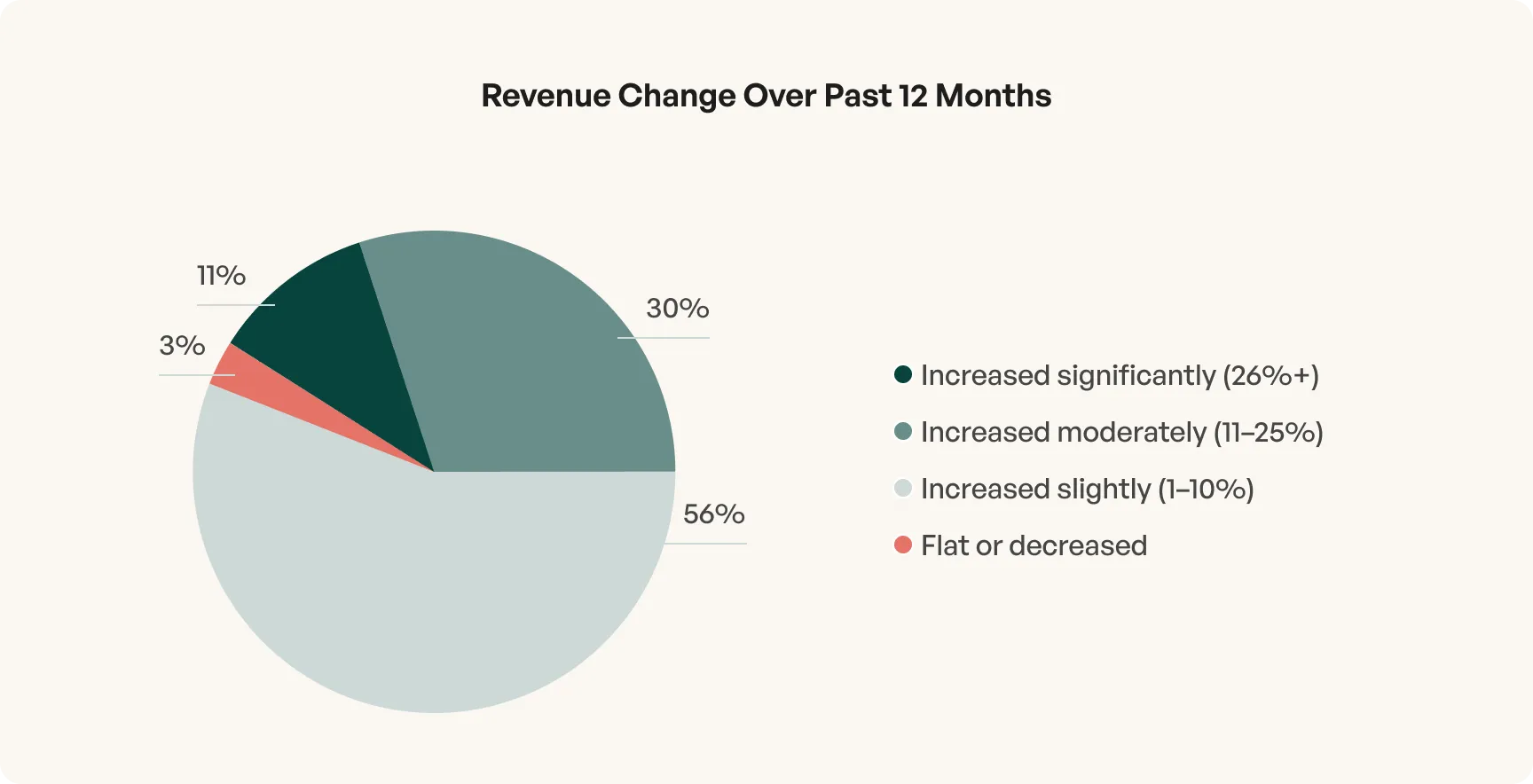
Device-based treatments (lasers, body contouring)
Injectables (Botox, fillers)
Weight loss programs (GLP-1s)
Hormone therapy / optimization
Esthetician-led skin services
