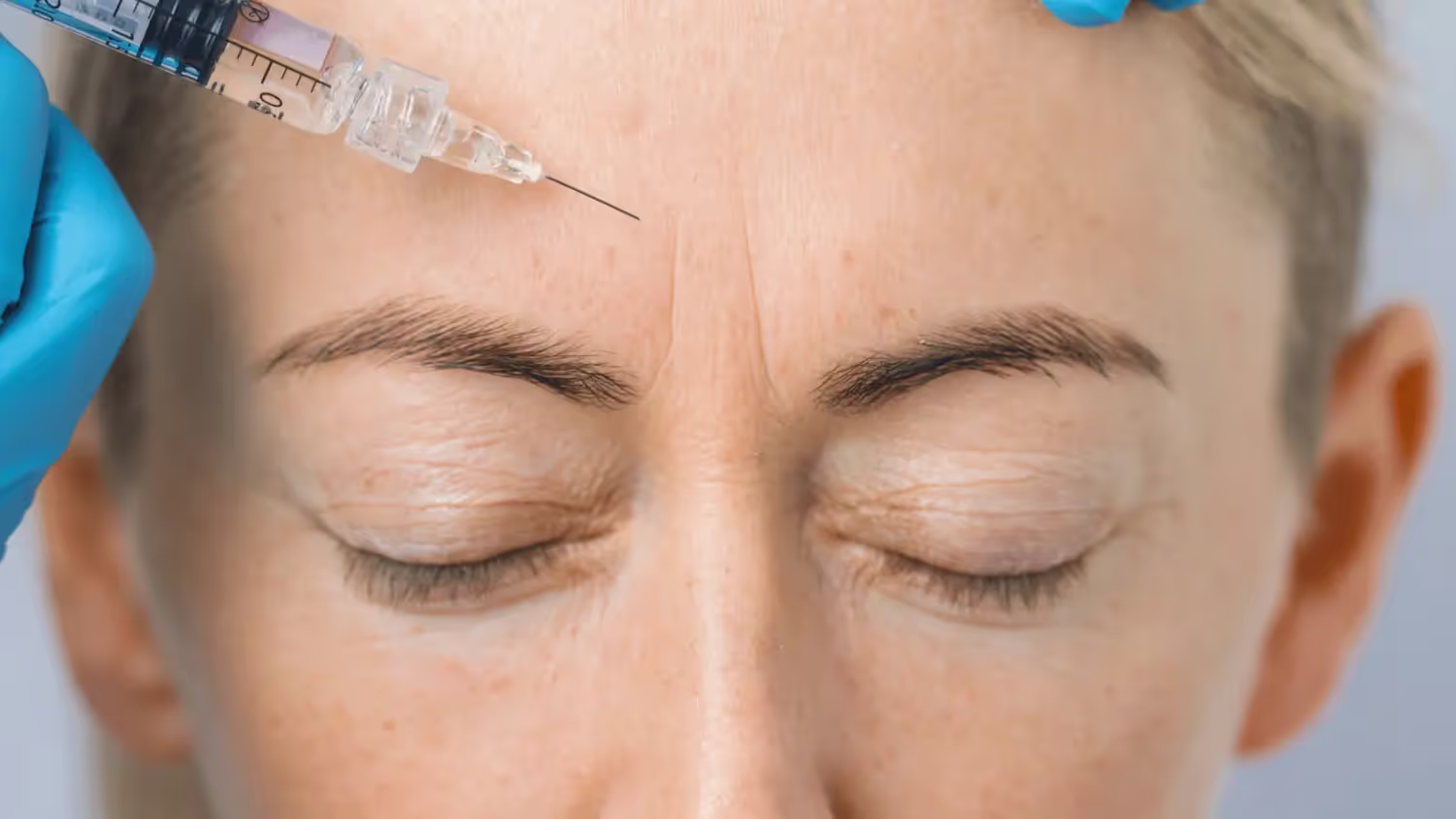
You know that patient who had a great first visit, loved her results, and said she'd be back…and then you never saw her again?
She didn't have a bad experience. She had an incomplete one.
She left with a single treatment behind her and no clear picture of where to go next. Or worse, she Googled her way into someone else's practice.
New clinical evidence explains exactly why this keeps happening and what changes it. A 2026 study published in the Journal of Cosmetic Dermatology found that patients given a formal, structured treatment plan were 2.5 times more likely to return at six months compared to those who weren't.
The finding held across neuromodulator, filler, and biostimulator treatments. It wasn't a single-modality fluke. It was a clinical model.
This is the most common — and most expensive — patient experience in aesthetic medicine. And the fix isn't more marketing. It's a better plan.
The Retention Problem Is a Planning Problem
Most practices treat patient retention as a marketing problem. They automate recall texts, run reactivation campaigns, and discount their way back into a patient's calendar. These tactics help at the margins. But they're treating a symptom.
The actual problem is structural: most aesthetic patients leave their first appointment with no roadmap. They got a treatment. They did not get a plan.
Without a plan, return is a matter of willpower — the patient's, not the provider's. Most of the time, willpower loses.
The retention gap is well-documented: dermatologists maintain an 85% patient retention rate, the highest in aesthetics, largely because they build long-term care relationships rather than single-visit transactions. Most independent aesthetic practices aren't close to that number. The difference isn't clinical skill. It's structure.
The 2026 Journal of Cosmetic Dermatology study put a number on what structure delivers: 2.5 times more likely to return at six months. A separate multi-clinic analysis of nearly 15,000 patients reached the same conclusion — structured facial assessment and treatment planning significantly improved six-month retention across 17 clinics over multiple years.
This isn't about selling harder. It's about treating better.
Why Most Practices Don't Do This
If structured treatment planning improves outcomes, increases retention, and raises lifetime value, why isn't every aesthetic practice doing it?
A few honest reasons:
The consultation model is reactive by default. Most practices were built to respond to patient requests, not to lead clinical conversations. Providers learn to deliver excellent treatments. Very few are taught how to structure and communicate a long-term care plan inside a standard consult.
There's no easy place to document it. General-purpose EMRs weren't designed for aesthetic treatment sequences. Providers who want to plan end up doing it in their head, on paper, or not at all because the system doesn't support it.
The line between guidance and upselling feels blurry. A lot of providers are uncomfortable presenting a multi-treatment plan because they worry it comes across as a sales pitch. The clinical literature disagrees with that instinct. Patients who receive structured plans report higher satisfaction and trust, not lower. But the anxiety is real and worth naming.
Consult skills haven't been treated as clinical skills. Practices invest in training for injections, devices, and protocols. Very few invest in training providers on how to run a consultation that leads to a plan. The consult gets treated as a gateway to the appointment, not as an appointment in itself.
What Structured Treatment Planning Actually Does
When a provider maps out the right treatments, in the right order, at the right frequency — and shares that map with the patient — a few important things happen.
Patients understand the trajectory. A single Botox appointment is a visit. A treatment plan for the next 12 months is a transformation. Patients who can see where they're going stay in the journey.
Clinical authority is established. When a provider leads the consultation with a structured, personalized plan, they are practicing medicine — not filling orders. That distinction matters to patients, even if they can't always articulate why. They feel the difference between a provider who has an opinion and one who just does what's asked.
Retention becomes structural, not relational. Practices that rely on the "she really likes me" model of retention discover its fragility the moment a provider leaves or a schedule shifts. A documented treatment plan transfers the relationship from person to practice.
Results improve. The HARMONY study (Aesthetic Surgery Journal, 2021; DOI: 10.1093/asj/sjab124) found that 99% of patients rated themselves improved or much improved after comprehensive, multimodal treatment. Multimodal treatment requires a plan. It rarely happens spontaneously visit by visit.
What Changes When You Build This Into Your Practice
The practices doing this well share a few characteristics.
They've stopped treating the consultation as a prelude and started treating it as the most important clinical moment in the patient journey. Everything the patient understands about their goals, their timeline, and their options gets established in that room.
They document the plan in the same system where treatment happens, so it's visible at every subsequent visit. A provider picking up a patient three months later can see what was recommended, what was done, and what's next…without starting from scratch.
They train their providers on consult quality with the same rigor they apply to technique. That includes how to present a multi-treatment plan in a way that feels like clinical guidance, not an upsell. The framing is the skill.
And they measure it. Rebooking rate. Overdue treatment rate. Six-month retention. Practices that build treatment planning into their process start to see these numbers improve because the plan is doing the work that hope used to do.
The Business Case Is Built Into the Clinical Case
There's a version of this argument that leads with revenue: treatment plans increase average transaction value, improve lifetime value, reduce churn. All of that is true.
But it's the wrong place to start. Providers who adopt structured treatment planning as a revenue strategy tend to implement it superficially. Patients feel the difference, and it doesn't stick.
Providers who adopt it as a clinical standard — because multimodal, sequenced care produces better outcomes, and patients deserve a roadmap, not a menu — implement it authentically. The business results follow.
This is what Clinically-Led Growth means in practice. Better medicine is better business. Not as a tagline. As a mechanism.
The 2.5x retention finding doesn't say "sell more treatments." It says "give patients a plan." The revenue is downstream of the clinical decision.
How to Start
If your practice isn't doing structured treatment planning today, you don't need to overhaul everything at once.
Start with the consultation. Before the next patient walks in, ask: does this person have a clear picture of where they could be in six months, and what it would take to get there? If the answer is no, that's the gap.
Build the plan into the appointment, not the follow-up. A treatment recommendation sent by email after the visit is a marketing email. A treatment plan discussed in the room, documented, and reviewed at the next visit is clinical guidance. The same words land differently depending on when and where they're delivered.
Use your EMR to hold it. The plan needs to live somewhere visible at every visit — attached to the patient record, reviewable before any appointment, updated as treatments are completed. If your current system doesn't support that, it's a real constraint worth solving.
And invest in the consult as a clinical skill. The best providers in aesthetic medicine aren't just excellent injectors. They're excellent at helping patients understand what's possible and how to get there. That skill can be taught, coached, and refined. It's worth treating it like one.
The Bottom Line
Patients who leave without a plan aren't lost causes. But they're much harder to retain than patients who leave with a clear roadmap and a reason to come back.
The data is consistent: structured aesthetic treatment planning improves outcomes, improves retention, and builds the kind of patient trust that doesn't require a discount campaign to sustain.
The practices winning in aesthetic medicine right now are the ones leading with clinical expertise — not reacting to patient requests. They've decided the consultation is where clinical leadership happens, and they've built their operations around it.
If you're ready to bring that structure into your practice, Moxie Treatment Plans gives every provider a care path they can build and share inside their existing clinical workflow — no extra tools, no separate system.
When you're ready to take the next step in launching or growing your aesthetic practice, here are 3 ways Moxie can help: